


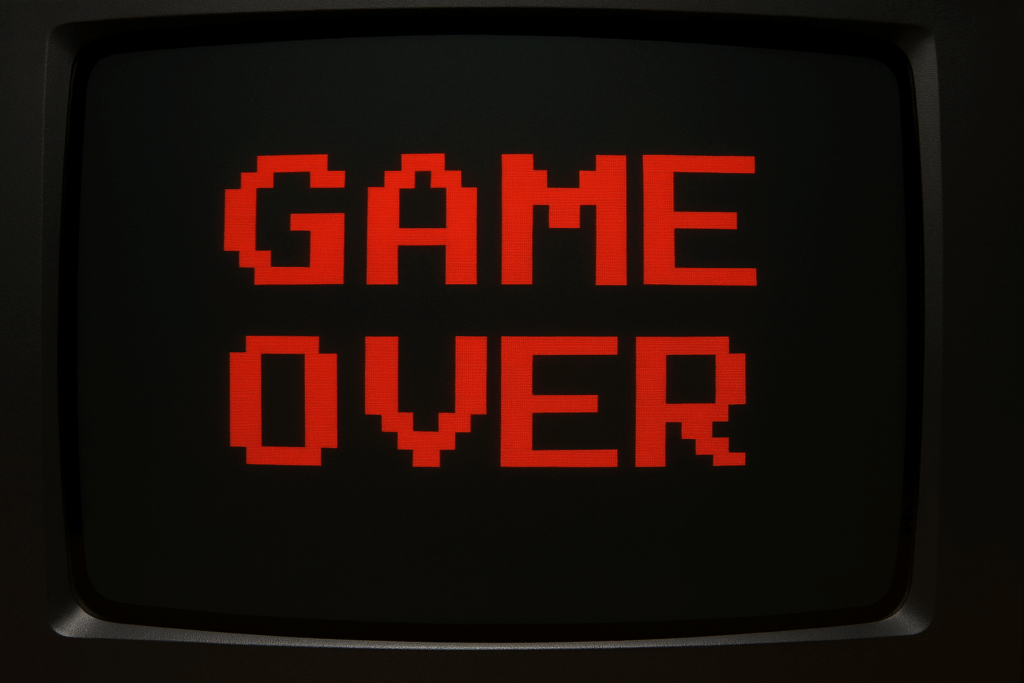
Few words in gaming carry the same weight as “Game Over”. Whether it’s a mocking laugh, a chilling fade to black, or just stark red letters, this little screen has been with us since the very start. It’s one of the medium’s oldest traditions, a ritual that marks failure, but also, strangely, creativity.
Far from being a simple stop sign, Game Over screens have been used to unsettle, to instruct, to mock, and even to entertain. In a world where instant respawns and autosaves are the norm, it’s worth pausing to remember how this humble message shaped gaming history.
Arcade roots
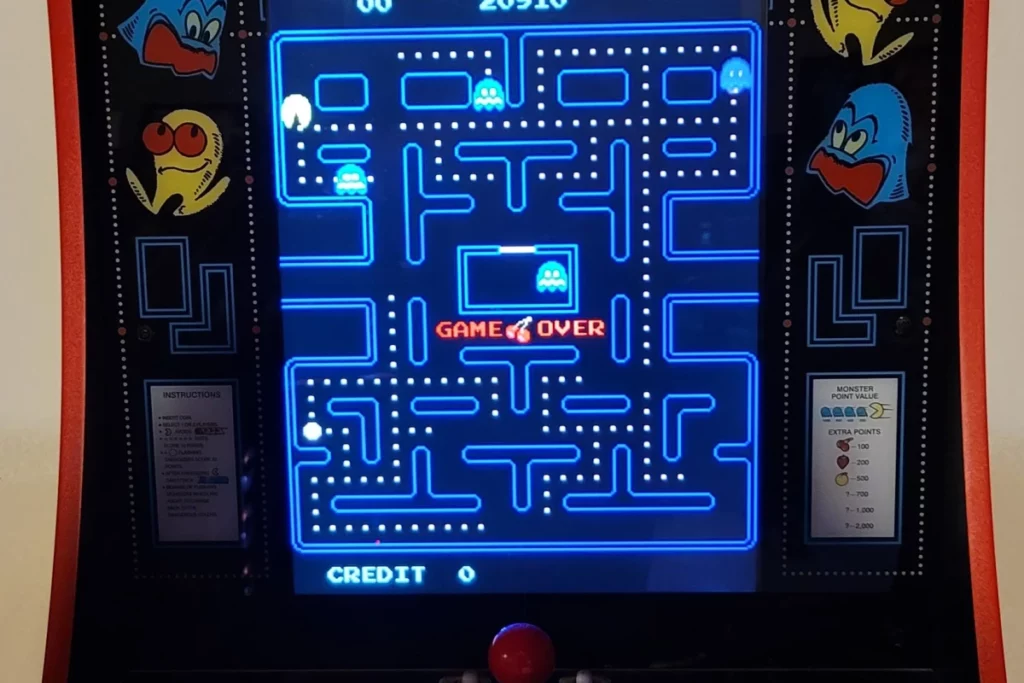
In the arcades of the late ’70s and ’80s, “Game Over” wasn’t designed to be elegant. It was blunt, functional, and above all, profitable. Those glowing block letters were the final line of the transaction: you’ve lost, now feed the machine another coin. Think of titles like Pac-Man or Space Invaders, where the Game Over screen arrived swiftly and mercilessly. There were no second chances, no handholding. You had one job: keep playing, keep spending.
But even in this cold context, the phrase gained cultural weight. The screen became iconic because it was universal; everyone recognised those two words, glowing against the darkness, backed by bleeps and bloops. They represented not just the end of a run, but the addictive loop of arcade design itself: failure wasn’t final, it was an invitation to try again, if your pockets allowed.
When Game Over became art
As gaming evolved into more narrative-driven, cinematic experiences, developers began to play with the concept. No longer just a transactional endpoint, Game Over screens became part of the story. Resident Evil 4 terrified players with gruesome death animations, making failure as memorable, if not more so, than success. Each Game Over wasn’t just punishment; it was a horror vignette that deepened the sense of dread.
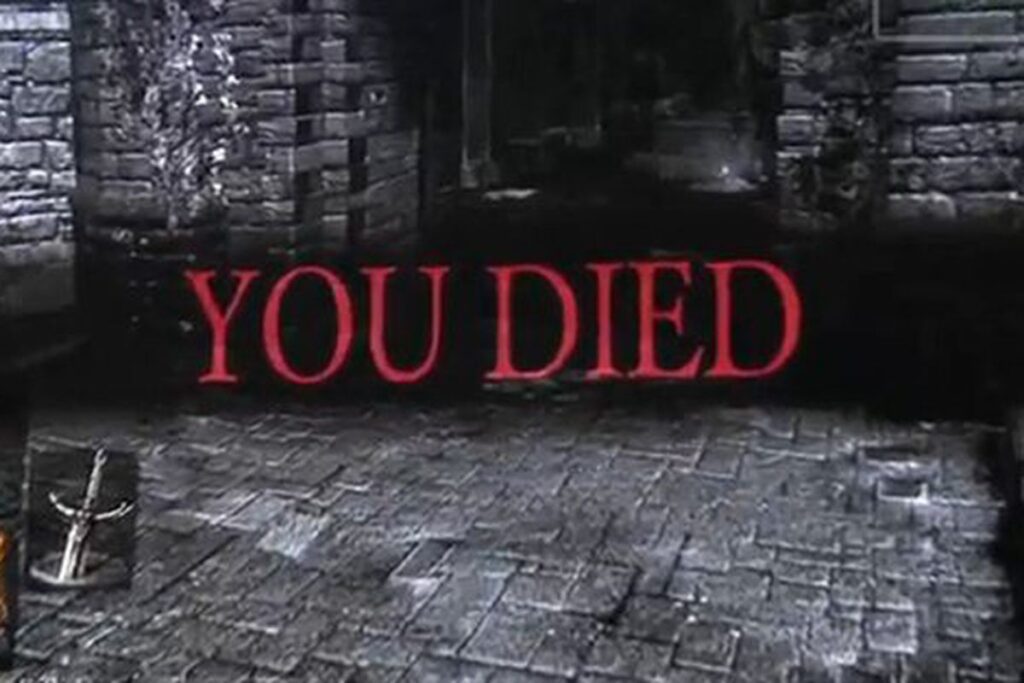
Then came the likes of Dark Souls. Its infamous “YOU DIED” screen wasn’t just a notification; it was a statement of identity. It taunted players, yet also became a badge of honour. The words carried weight, frustration, and, strangely enough, pride. Failure was baked into the game’s DNA, and the Game Over screen was the punctuation mark that defined the entire experience.
Humour in failure
Of course, not every developer used Game Overs to terrify. Some used them to laugh with, or at, the player. Monkey Island famously joked about death, offering tongue-in-cheek “endings” that poked fun at the trope itself. Conker’s Bad Fur Day went even further, using Game Over sequences as opportunities for crude humour and parody.
Even games like Earthworm Jim or Metal Slug found ways to make losing entertaining, often leaning into cartoon slapstick. These comedic twists turned frustration into amusement, proving that a well-crafted Game Over could be just as satisfying as a victory screen.

The disappearing Game Over
With the rise of home consoles, save systems, and eventually autosaves, the necessity of a Game Over screen started to wane. Modern players expect instant retries, seamless checkpoints, and continuous play. Games like Spider-Man 2 or Starfield whisk you back into the action in seconds.
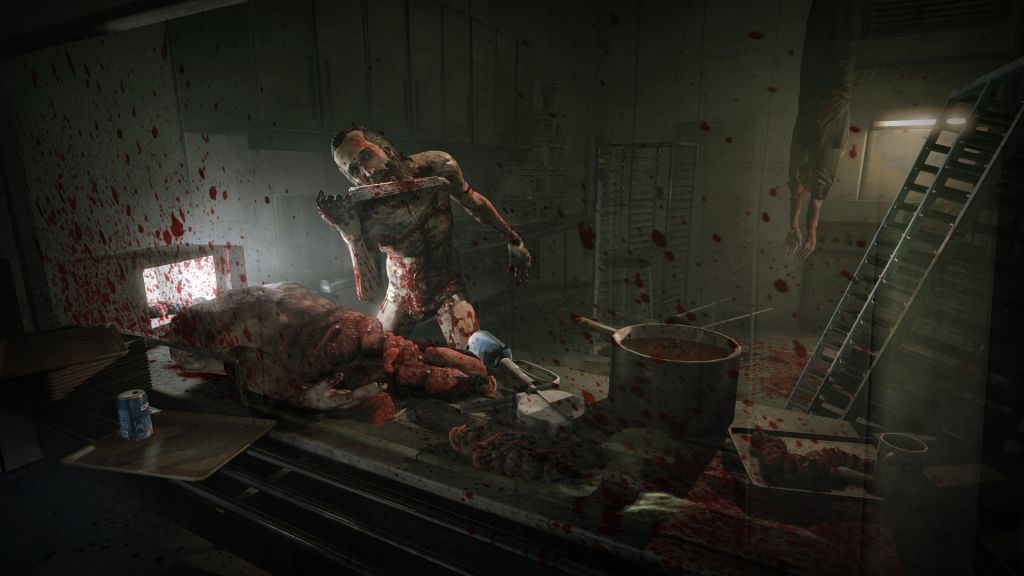
But this shift hasn’t erased the idea entirely. Instead, it’s transformed it. When a Game Over screen appears today, it feels deliberate, a design choice rather than a necessity. Horror titles like Until Dawn or Outlast use failure screens sparingly, ensuring they hit harder. Indie games sometimes embrace them as a stylistic throwback, tapping into nostalgia as much as gameplay. What was once a constant is now a rare, curated experience.

Why they matter
Game Over screens endure because they mean something beyond failure. They’re emotional punctuation marks, stamping memory onto the end of a run. Sometimes they frustrate, like an NES Ninja Gaiden screen forcing you to restart a level. Sometimes they terrify, like a Silent Hill fade into static. Sometimes they even inspire laughter, like Conker or Monkey Island.
They remind us that failure is part of the journey, not just an obstacle to overcome. They shape how we remember the games we play, becoming cultural touchstones as iconic as the games themselves. In some cases, those two little words are more recognisable than the characters we were controlling.

Game Over screens may be less common today, much like loading screens, but they’ve left an indelible mark on gaming culture. They taught us resilience, added atmosphere, and sometimes even gave us a good laugh. Whether you were dropping coins into Pac-Man or cursing at Dark Souls, that glowing end screen became part of the story. In a way, they prove that in games, as in life, failure isn’t just the end, it’s part of the art.
Want to explore more opinion pieces like this? Then click right here.