


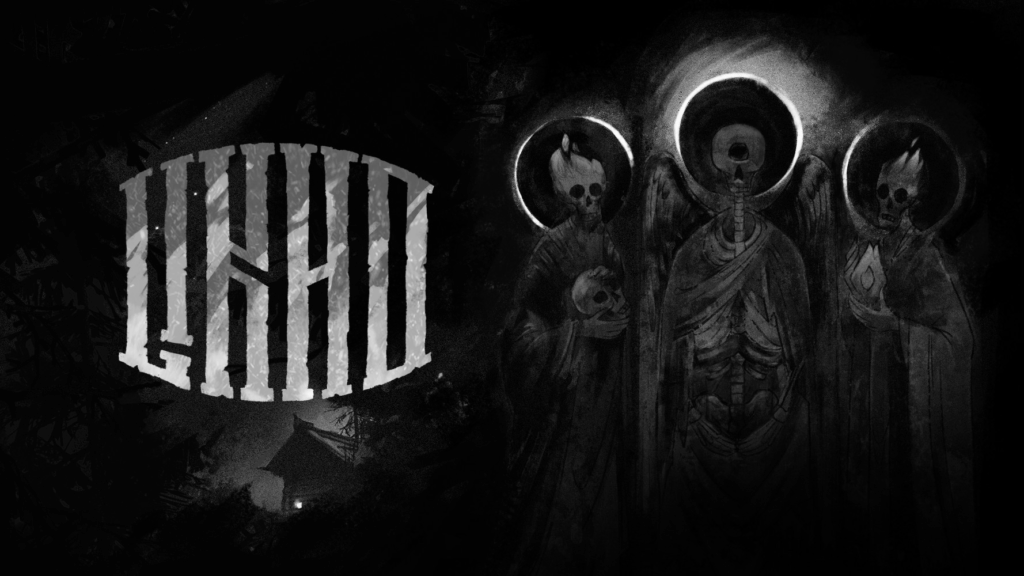
With its stark monochrome visuals, eerie forest trails, and haunting nods to Slavic folklore, One-Eyed Likho isn’t just another horror game; it’s a chilling, handcrafted descent into myth and misfortune.
Developed by Morteshka, the same team behind Black Book and The Mooseman, this first-person folk horror adventure draws heavily on Eastern European legends, reimagining them through a stylish and oppressive 19th-century Russian lens. You’ll navigate dark, decaying woods with little more than a box of matches and your wits, all while trying to outpace Likho, the one-eyed embodiment of bad luck.
Ahead of One-Eyed Likho’s official release, we had the chance to speak with the team at Morteshka about their inspirations, development challenges, and the folklore that shapes their work. But first, a quick peek at a trailer of the game:
One-Eyed Likho announcement trailer

To start, could you introduce yourselves to our readers? What is your background, and how did Morteshka come to be?
Hello, my name is Vladimir Beletsky. I am the founder and game designer at Morteshka. Morteshka is a small indie studio originally from Perm, Russia, and now based all over the world. Our studio specialises in dark, myth-inspired narratives grounded in academic research related to each game’s theme.
The name “Morteshka” is a wordplay on “mort” (French for death and Komi for man) and “matryoshka” (the traditional Russian nesting doll), reflecting the layered nature of our games—dark toys for the modern era.
The studio began during a game jam, where we created a prototype for our first game, The Mooseman. That prototype later evolved into a full Steam release. We are now about ten years old.
Your previous titles, The Mooseman and Black Book, also delve into Slavic folklore. What draws you to these themes, and how does One-Eyed Likho continue this exploration?
The Mooseman drew more on Finno-Ugric folklore than on Slavic traditions. We’re naturally attracted to themes grounded in real, often dark, folk narratives that remain under-represented in modern media—our way of standing out in the crowded indie scene.
Black Book was inspired by bailichkas, those short folk tales about encounters with demonic beings—a form of magical realism. One-Eyed Likho continues with exploration of fairy tales by delving into the “blinded ogre” motif, primarily sourced from Russian Empire folklorists but also weaving in similar tales from other cultures. Our goal is to tie these strands together to uncover the deeper meaning behind the motif and its most famous fairy tale.
One-Eyed Likho’s monochrome aesthetic is striking. What inspired this visual choice, and how does it enhance the horror elements of the game?
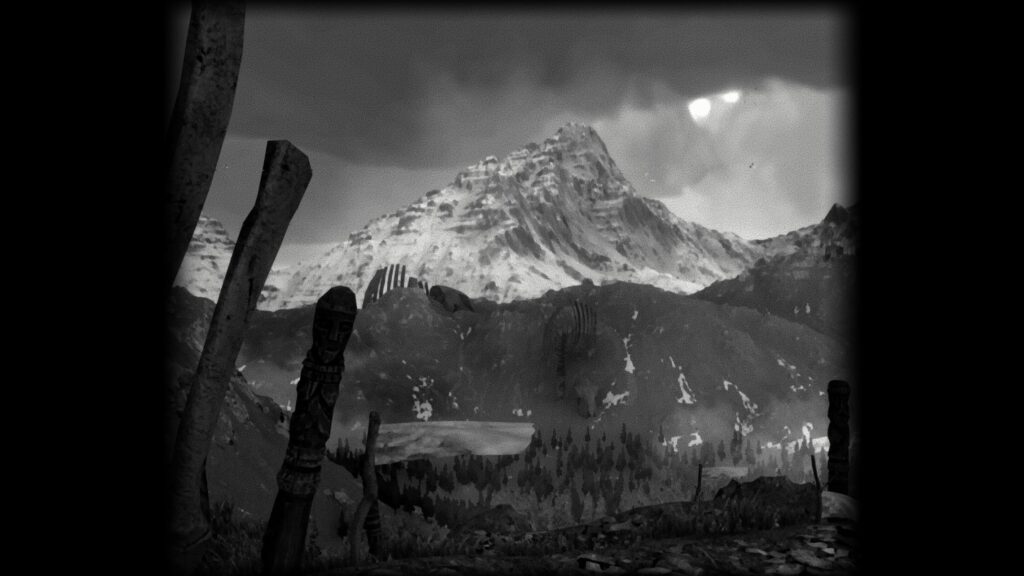
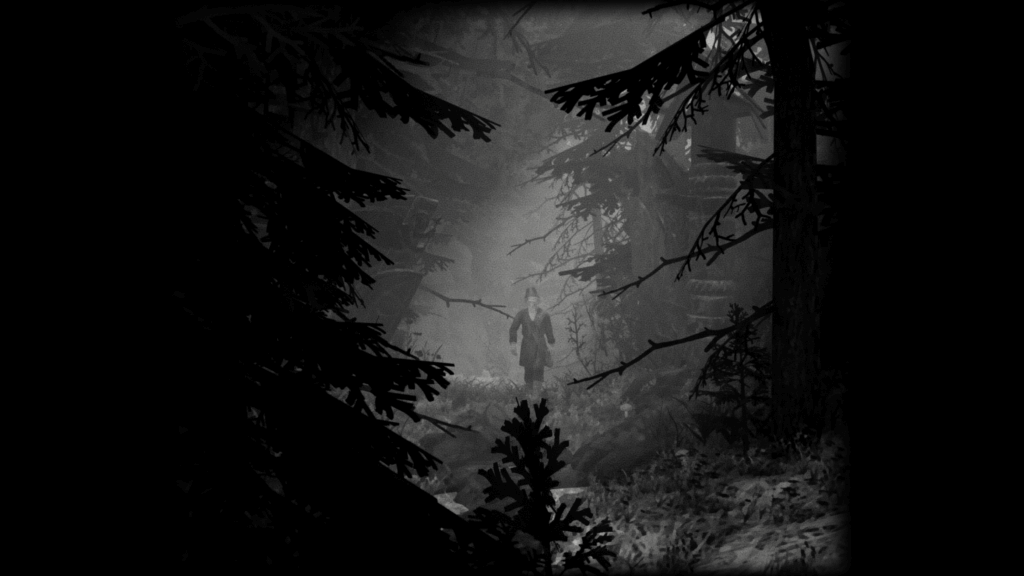
At first, it was simply a way to cut corners, but it proved perfectly fitting for the story we wanted to tell. We were inspired by games like Mundaun and Return of the Obra Dinn, as well as classic and modern black-and-white horrors and folk horror films. I’m talking about silent-era Nosferatu, the Soviet film Viy, and more recent titles like The Lighthouse and November.
By stripping away colour, we reinforce the game’s oppressive atmosphere and focus the player’s attention on light, shadow, and the stark contrasts that heighten the horror.
One-Eyed Likho is based on a Slavic fairy tale. Could you share more about this tale and how it influenced the game’s narrative?
The game follows the One-Eyed Likho fairy tale as recorded by Afanasyev almost verbatim. The characters recite lines from the original tale, and—apart from the puzzles and jump scares—the events of the game closely mirror the story.
When we first began, the narrative seemed simple: a man meets a monster in the woods, and so on. But we discovered that the fairy tale is extremely ancient—some research suggests its origins go back to Palaeolithic times or even earlier. Over the millennia, this “Blinded Ogre” motif (AT1137) spread far and wide across the globe, appearing in countless cultures.
We decided to weave that history into the game: you’ll find references to other variants of the story and translated versions of related tales as in-game collectables. Many of these texts are being published for the first time in English and in the other languages for which we’re localising the game.
The ‘burn mechanics’ using matches are a unique gameplay element. How did this idea come about, and what challenges did you face implementing it?
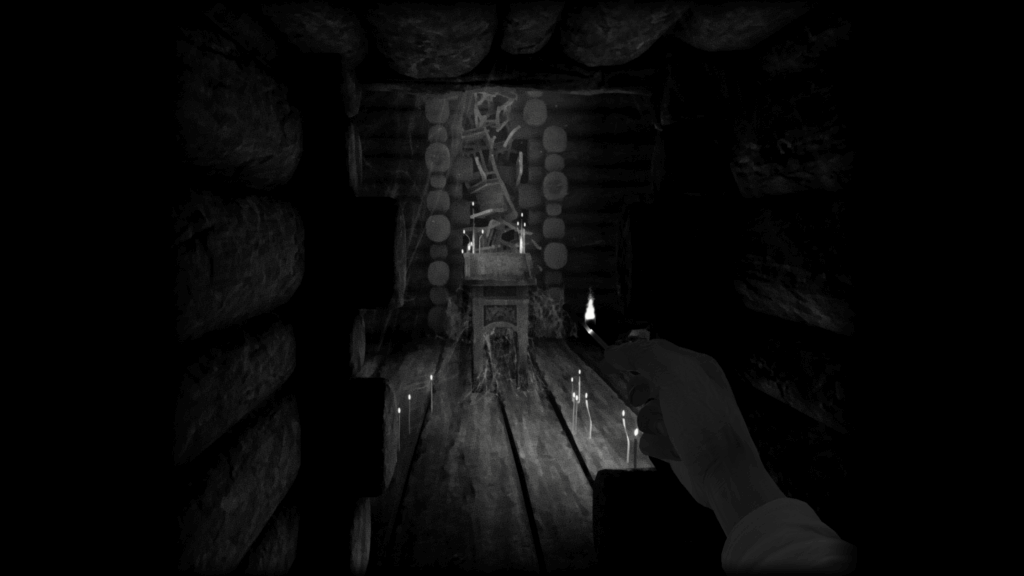
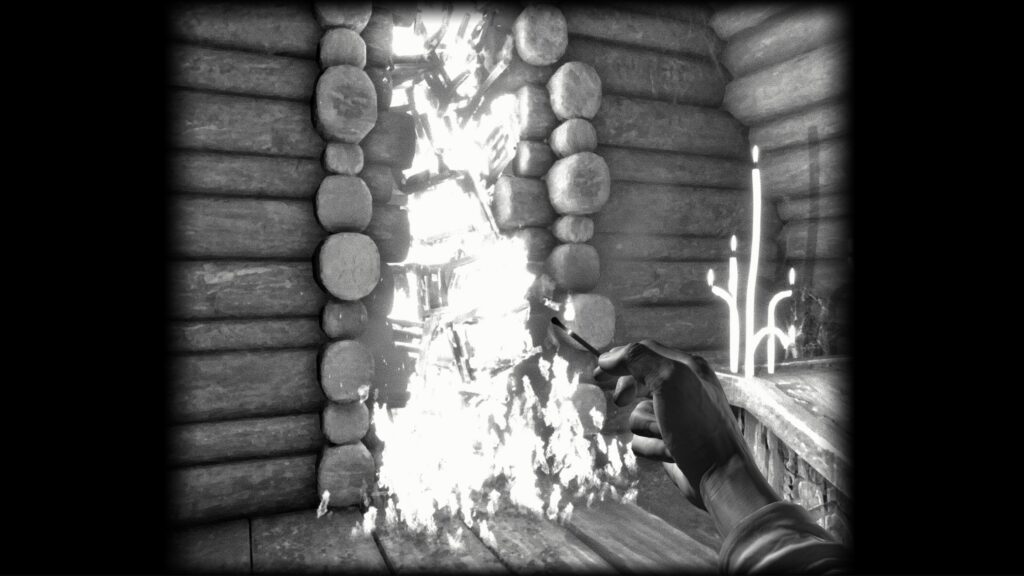
We originally planned a simple horror-style lighting mechanic—think lantern or flashlight—but then, inspired by the photography mechanics in Visage and Madison, we decided to combine the two concepts. Given the game’s rough time period, matches felt like the perfect choice.
Implementing the burn mechanics was definitely challenging. Beyond the usual bugs, our biggest struggle was balancing the core lighting system with the puzzle-solving elements. We repeatedly tweaked match configurations, level designs, and puzzle layouts to try to get the right feel. Did we solve every challenge? I’m not entirely sure—ultimately, only the players will decide.
Sound design plays a crucial role in horror games. How did you approach the audio aspects to build tension and atmosphere in One-Eyed Likho?
All credit for our sound design goes to our sound designer and composer, Mikhail Shvachko. It’s hard to describe exactly how he crafts the atmosphere, but in his own words, he experiments extensively—combining different noises, effects, and unexpected sounds. He then discards most of these experiments, leaving only the few elements that make their way into the final game.
The game features a companion character, the Tailor. What role does he play in the story, and how does his presence affect gameplay?
He is the only companion the player has throughout the game. In fairy-tale terms, he serves as the magical helper. Narratively, he’s crucial—guiding the Smith to understand the strange events around him—and mechanically, he’s invaluable: with his help, you can unlock hidden passages and discover optional collectables. For example, he can retrieve items lodged in narrow pipes that the Smith himself could never reach, even in his prime.
Puzzles are integral to One-Eyed Likho’s gameplay. How did you balance the difficulty to ensure they are challenging yet accessible?
Our main strategy is to playtest each puzzle, refine it, then playtest again—rinse and repeat—until we strike the right balance between challenge and accessibility. We’re now in the polishing stage, not far from release, and we’re still discovering areas for improvement. Is there even such a thing as a perfectly balanced puzzle?
One-Eyed Likho is set in 19th-century Russia. How did you research and recreate this historical setting to ensure authenticity?
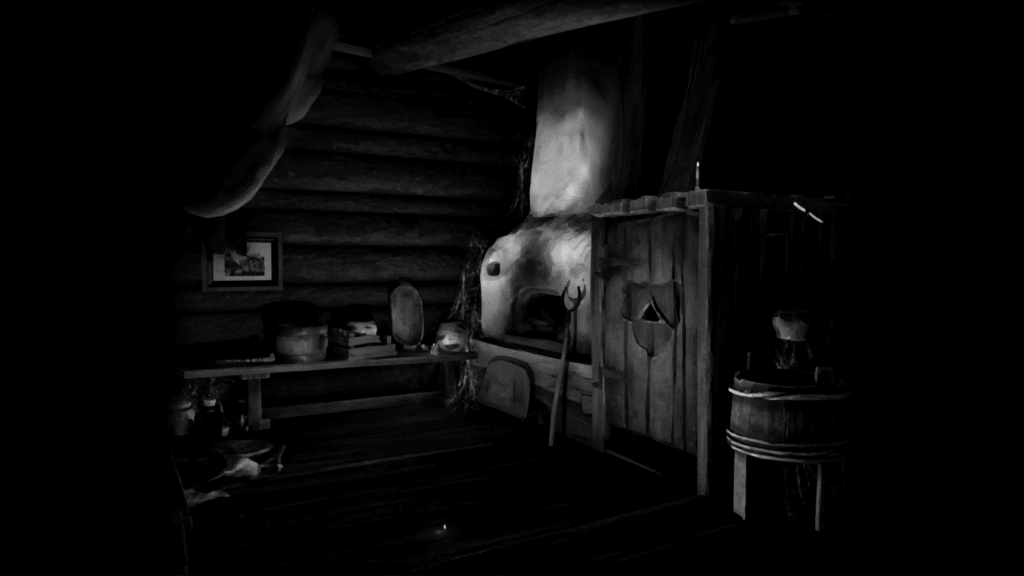
We consulted extensive historical literature and reference materials from the 19th century. We studied authentic wood carvings, metalwork decorations, and everyday objects of the period to inform our in-game props and environments.
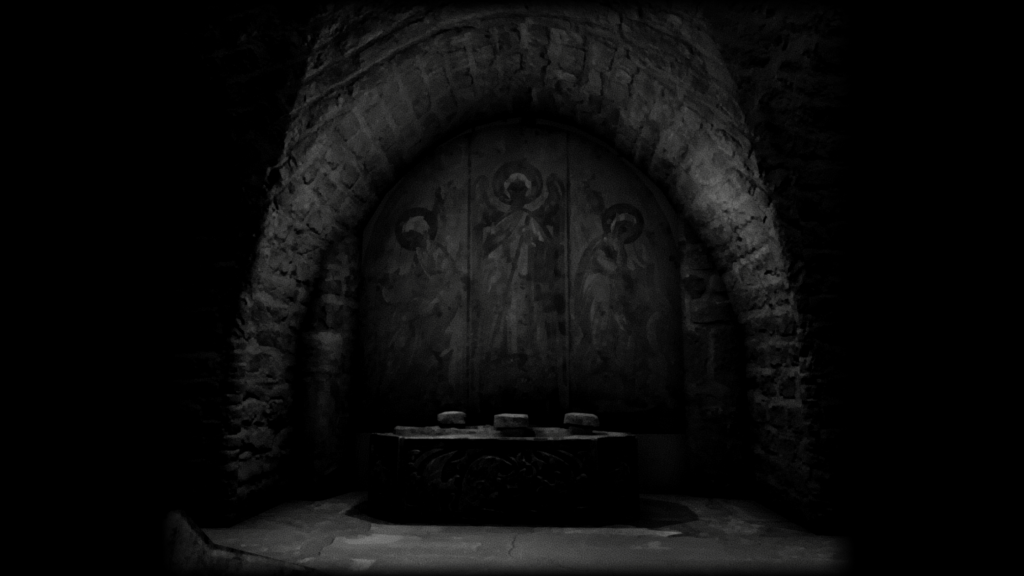
That said, much of the game takes place in the Tridevyatoye Tsarstvo—a distant, otherworldly realm of the dead—so we still had the creative freedom to weave in fantastical elements alongside our historically grounded designs.
Folklore often carries moral lessons. Are there particular messages or themes you hope players take away from One-Eyed Likho?
We hope that each player finds their own meaning in the game. We didn’t set out with a specific moral in mind—our primary goal was to explore the historical origins of this motif—but, as Todd Hido says, we aimed to “electrify the air” enough for players to draw their own conclusions.
The One-Eyed Likho demo received positive feedback for its atmosphere and storytelling. How has player feedback influenced the development of the full game?
The positive response gave us the confidence to keep going. Much of the feedback was very specific—bug reports and feature requests—and we carefully review every comment. We fix confirmed bugs and implement feasible suggestions wherever possible to make the full game even stronger.
With the official release date approaching, what are you most excited for players to experience in the full version of One-Eyed Likho?
My favourite part is the ending of the game. Everything comes together in a grand finale, and personally, I love it. I can’t wait to see players’ reactions when they experience it. Will they like it? Will they grasp the full story? What will they say after playing? That’s what excites me most.
Looking back, what has been the most rewarding part of developing One-Eyed Likho, and what has been the most challenging?
The development was challenging because, after working for quite some time on a card-battler RPG, we ventured into the uncharted chthonic depths of the first-person horror genre. Learning the tools and techniques to create the right atmosphere was tough, but equally rewarding. When we play our game, we see that we’ve created something with its own unique vibe.
For aspiring game developers, especially those interested in incorporating cultural folklore into their games, what advice would you offer?
Our key approach is to immerse ourselves in academic research on folklore, so our games carry genuine depth. My advice is to study your chosen culture’s myths and legends thoroughly—this makes it far easier and far more meaningful to weave them into your game’s narrative.
Finally, a fun question: If you could have any mythical creature from Slavic folklore as a pet, which one would you choose and why?
I’d probably choose the Bayun Cat. They say he tells wonderful stories—but the catch is that he also has a notorious taste for devouring people.
A huge thanks to the team at Morteshka for taking the time to chat with us. One-Eyed Likho looks set to deliver a uniquely atmospheric horror experience that blends puzzle-solving, folklore, and fear in all the right ways.
We can’t wait to explore more of One-Eyed Likho’s twisted world when it launches on July 28th, 2025, and we highly recommend adding it to your wishlist now.
Want to read more of our latest chats with game developers? Head over to our interviews section.